
Project in de kijker: Rethink Energy For Food
/
Project in de kijker: Rethink Energy For Food
Binnen het COOCK+ project Rethink Energy For Food – gefinancierd door VLAIO en Flanders Food – onderzoeken Howest AI Lab en Energy Lab hoe restwarmte in industriële processen kan gerecupereerd worden.
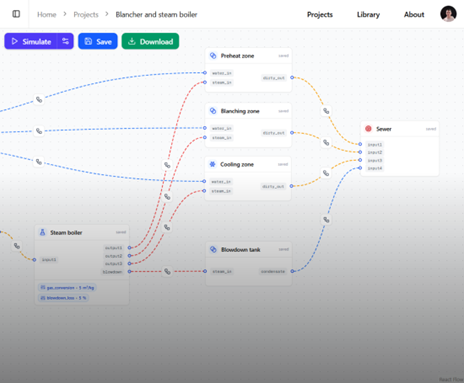
Om dit concreet te maken, ontwikkelden we een generieke simulatietool waarmee voedingsbedrijven inzicht krijgen in hun mogelijke energiebesparingen en de economische haalbaarheid van restwarmteprojecten kunnen inschatten.
Voor dit project werken we samen met VEG-i-TEC van de Universiteit Gent. Deze kleinschalige industriële pilootinstallatie is een proeftuin waar onderzoek gedaan wordt naar innovaties binnen de voedingssector.
Main section
Kerngegevens
/
Buffertanks kunnen energieconsumptie reduceren
/
Supabase: de all-in-one backend voor jouw app
Reduceren van energieconsumptie
Use-case
VEG-i-TEC beschikt over een blancheur, dit is een machine om frieten en groenten kort maar krachtig te stomen. Uit deze machine loopt heet afvalwater naar de riolering, maar hier zit nog heel wat thermische energie in.
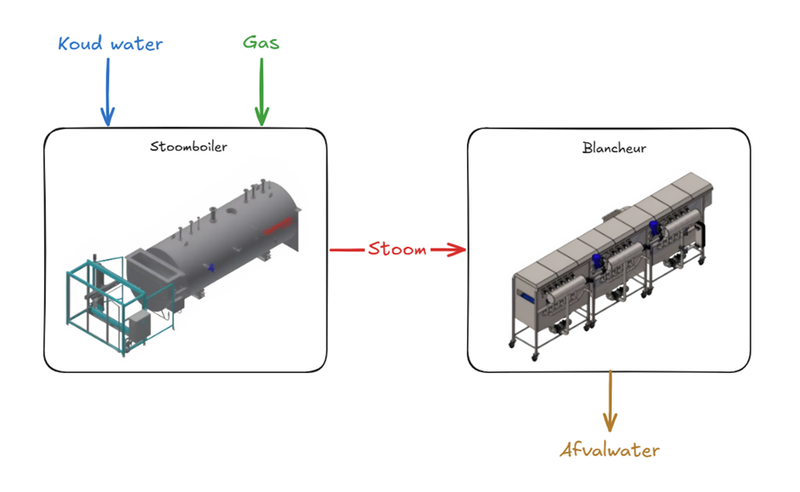
Ons onderzoek richt zich op het recupereren van deze energie: we willen de warmte uit het afvalwater overbrengen naar vers water en dit vervolgens opslaan in een buffertank. Dit voorverwarmde water kan dan gebruikt worden in andere processen die warm water vereisen, in plaats van koud leidingwater te moeten verwarmen. Afhankelijk van de verbruiker leidt dit tot een reductie in elektrisch stroomverbruik of gasconsumptie.
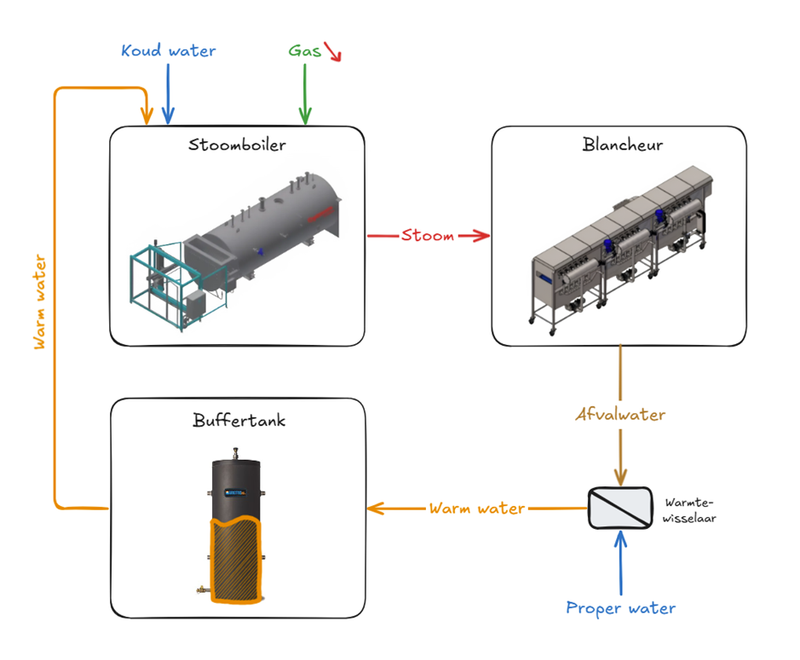
Uitdagingen
Vooraleer een bedrijf investeert in een buffertanksysteem, is het essentieel om te weten hoeveel gas of elektriciteit er potentieel bespaard kan worden, en wat de optimale capaciteit van de tank zou zijn.
Industriële processen zijn vaak heel complex en dynamisch, wat deze inschattingen heel lastig maakt. Daarom ontwikkelden we een gebruiksvriendelijke simulatietool om dit proces te vereenvoudigen.
Simulatietool
Na het inloggen in de applicatie krijgt de gebruiker een overzicht van al zijn projecten te zien. Elk project bestaat uit een blokschema, waarbij elke blok een procesonderdeel (machine, tank, …) voorstelt. De verbindingen tussen blokken stellen de buizen voor waar vloeistoffen door gepompt worden.
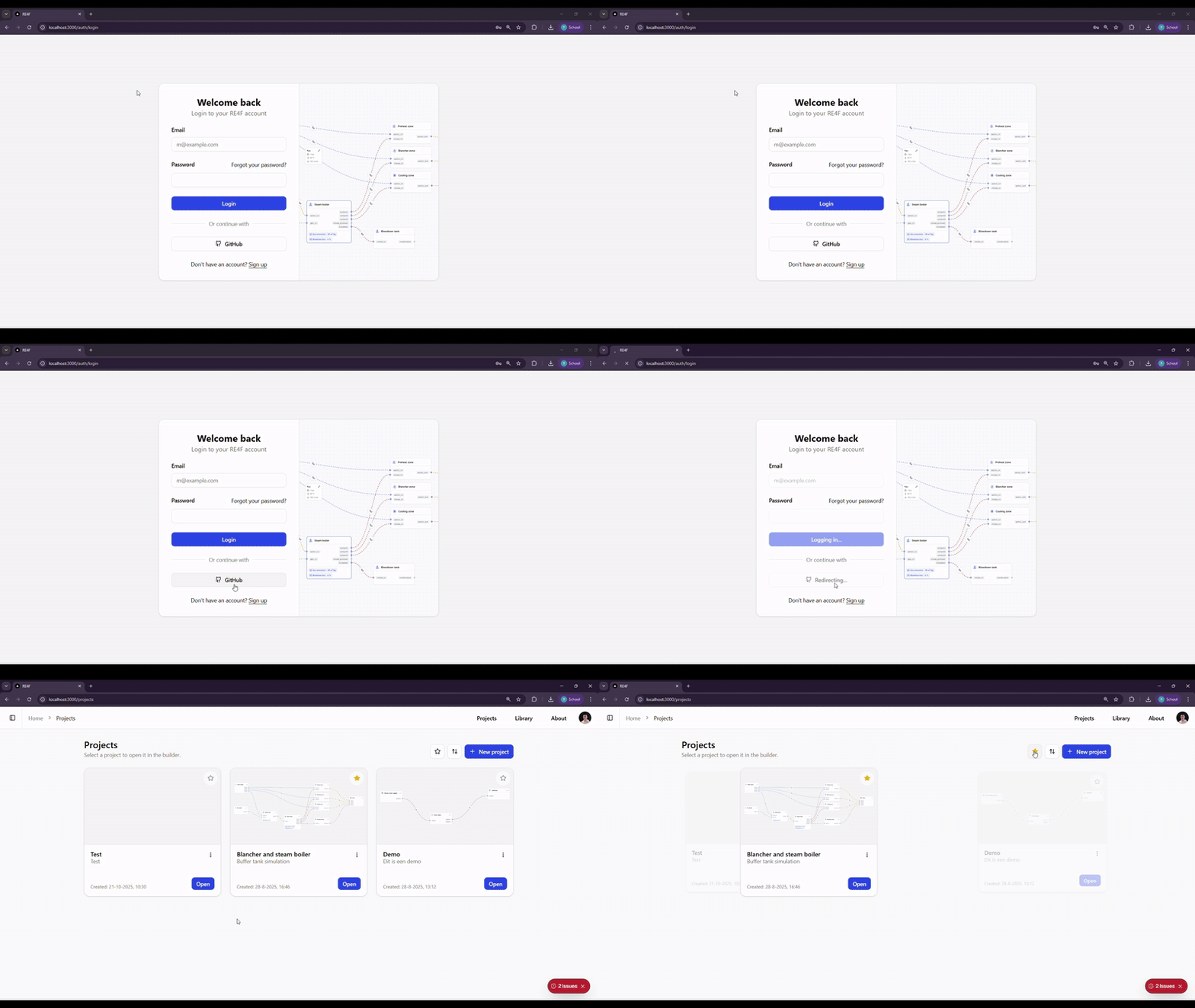
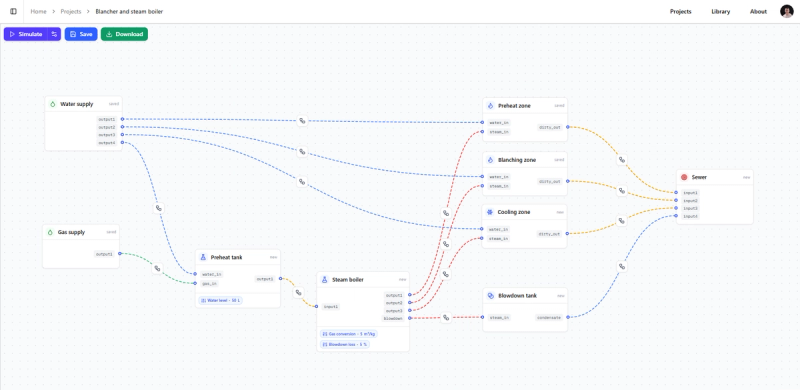
In de linker zijbalk staan een aantal voorgemaakte componenten, maar je kan ook zelf een nieuwe aanmaken. Het is de bedoeling dat men later zijn/haar nodes kan publiceren zodat andere mensen deze ook kunnen gebruiken om zo een grote bibliotheek uit te bouwen.
Aan de rechterzijde kan men alle eigenschappen van de geselecteerde component of buis aanpassen. De meest opmerkelijke eigenschap is de Python code sectie. De gebruiker kan namelijk het gedrag van machines zelf programmeren met de CoolProp library (fysische berekeningen). Dit kan uiteraard manueel, maar er is ook een AI-knop voorzien om de code door ChatGPT te laten genereren. Je kan dit schema dus beschouwen als een ketting van Python functies (stukjes code) die sequentieel aan elkaar gelinkt zijn.
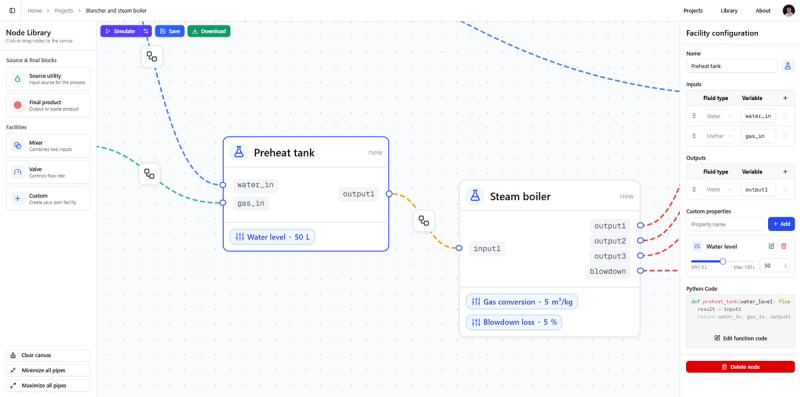
Als we bv. 100 uren willen simuleren met een interval van 1 minuut, dan zal de simulatie uit 6000 stappen bestaan. Dit houdt in dat we de ketting van Python functies eenmaal uitvoeren en dit 6000 keer herhalen. Na elke stap houden we de temperaturen, drukken, debieten en thermische energiën bij van alle vloeistoffen.
Technische uitwerking
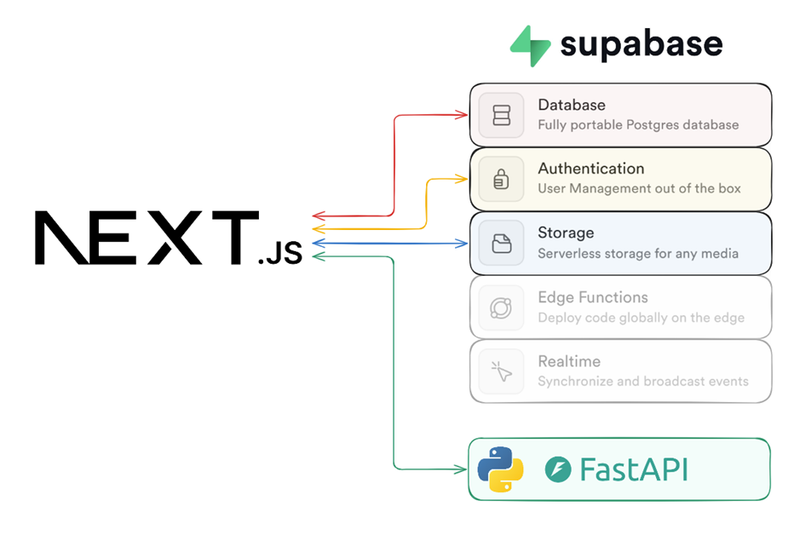
De website is gebouwd met Next.js, een modern React framework dat server-side rendering ondersteund. Voor de backend gebruiken we Supabase, een open-source alternatief voor Firebase die een oplossing biedt voor:
- Databeheer (PostgreSQL)
- Authentificatie
- Bestandsopslag
- Real-time data
- REST en GraphQL API’s
Via Supabase enkel mogelijk om JavaScript APIs te maken, maar omdat de simulaties gebruikmaken van Python code is dit niet geschikt. Technisch gezien bestaan er libraries zoals Pyodide die het mogelijk maken om Python code uit te voeren in een JavaScript omgeving. Wij kozen ervoor om voorlopig een aparte API in Python uit te werken met FastAPI.
Bottom section
Volgende stappen
De volgende stap is het toepassen van reinforcement learning om automatisch de meest optimale parameters en buffertank capaciteit te berekenen. Daarnaast willen we gebruikers de mogelijkheid bieden om hun eigen gecapteerde data te uploaden. Tot slot streven we ernaar om de applicatie publiek toegankelijk te maken, zodat iedereen ermee aan de slag kan.
Wens je op de hoogte te blijven? Volg Howest AI Lab en Rethink Energy For Food op LinkedIn.